

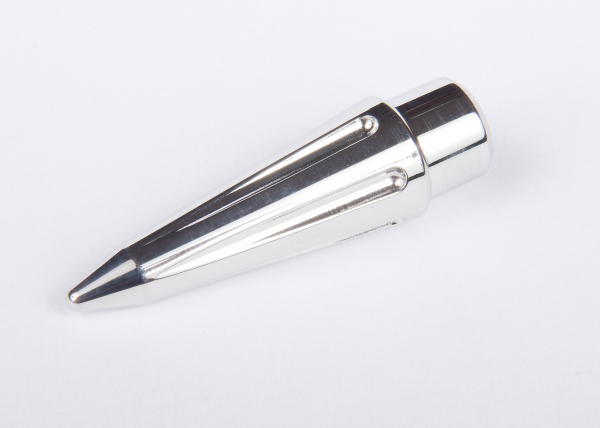
Stainless steel machining cuts, shapes, and finishes various stainless steel alloys into high-precision, corrosion-resistant components. Using CNC production, this process combines extreme precision, high repeatability, and exceptional durability to meet strict biocompatibility and sterilization standards, creating complex surgical tools, implants, and other critical medical devices. Marver Med specializes in CNC machining stainless steel, offering over 75 years of experience in producing components to strict medical standards.
For more information on our capabilities, contact us, and one of our experts will be happy to assist you with any questions you may have.
As one of the most popular alloys for CNC machining, stainless steel is highly favored for medical device manufacturing due to its material properties. Stainless steel offers non-porous, smooth surfaces that are easy to sterilize, along with biocompatibility and resistance properties that ensure its reliability. It can also be manufactured with precision, allowing for the production of sharp edges and complex, flexible shapes for a wide range of medical devices, surgical tools, and diagnostic equipment.
The material properties of stainless steel offer high-performance advantages to withstand demanding medical environments, providing reliability and functionality across various applications.
With its durability and strength, stainless steel can withstand repeated use and mechanical stress. It maintains its integrity over time and enables the creation of smaller, more precise components.
Stainless steel has a non-porous surface that reduces the risk of contamination by preventing the buildup of bacteria and germs. It is easy to clean and sterilize, which allows it to meet strict medical sanitation standards.
As a corrosion-resistant material, stainless steel resists bodily fluids, chemicals, and sterilization processes, helping prevent rust and degradation and extending the lifespan of devices and instruments.
Depending on your application's needs, certain stainless steel grades may offer greater benefits and features to meet your specific requirements. Here is a quick comparison table on popular stainless steel materials for medical applications:
|
|
Series 300 |
Series 400 |
17-4 PH |
13-8 MO |
|
Type |
Austenitic, chromium-nickel alloys |
11-27% chromium alloys |
Martensitic, chromium-nickel alloy |
18% chromium, 10-14% nickel, and 2-3% molybdenum |
|
Key Properties |
Non-magnetic, high ductility, corrosion resistant, and high-temperature strength |
High strength, wear-resistant, magnetic, and superior durability |
High strength and hardness, superior corrosion resistance, and versatility |
High ductility, excellent fabricability, and thermal stability and strength |
|
Best For |
Medical, aerospace, and industrial parts—sanitary equipment and pressure-containing components |
Automotive and industrial components—exhaust systems, shafts, wear parts, and surgical cutting tools |
Aerospace, medical, and industrial parts—precision components, pump parts, valves, and fasteners |
Medical, aerospace, and industrial parts—especially pharmaceutical, chemical, and high-temperature process equipment |
In addition to medical devices and components, stainless steel machining can also be used for aerospace, automotive, and industrial equipment applications.
Stainless steel is well-suited for CNC-machined medical parts, including medical implantable devices, surgical instruments, and other medical components. With its antibacterial properties, corrosion resistance, biocompatibility, and ability to withstand sterilization processes, it can reduce the risk of infection from contaminants or surface imperfections, while also providing reliability and functionality over time when combined with precision manufacturing. Marver Med offers decades of experience to produce high-quality, high-accuracy medical components and instruments to meet your needs.
We are an ISO 13845:2016-certified manufacturer with expertise in CNC production of stainless steel medical components. Working with a wide range of medical-grade materials, our capabilities allow us to deliver tight tolerances and complex parts, taking your desired components from prototype to production and through fulfillment, offering full-service solutions for your project. Marver Med provides a full suite of CNC capabilities, including:
To help determine if CNC stainless steel machining is right for your medical application, we’ve addressed some frequently asked questions about this material and process:
For machining medical-grade products, typically the 300 series of stainless steel, particularly 304 and 316/316L, are the most common due to their corrosion resistance and biocompatibility characteristics.
CNC stainless steel machining offers high-precision, repeatable capabilities that can achieve complex geometries, delivering strong, corrosion-resistant parts with long lifespans and reliability.
Stainless steel is more cost-effective and easier to machine, making it suitable for general medical parts, while titanium offers a better strength-to-weight ratio and biocompatibility for medical implantable devices.
Yes, certain grades, such as 316L, are commonly used for implants due to their corrosion resistance and biocompatibility, but these products must meet strict medical standards and application-specific requirements.
With over 75 years of high-precision CNC machining experience, Marver Med can produce stainless steel medical components to your exact specifications. From CNC milling and turning to advanced laser Swiss processes, we achieve exceptionally tight tolerances and intricate geometries to deliver high-quality custom solutions for a range of medical applications. Our capabilities are backed by engineering support and span several different CNC processes to ensure your finished component is safe, reliable, and built to last. Contact Marver Med to discuss your project requirements or request a quote to begin.

ISO 13485:2016 Certified and ITAR Compliant

| Certifications | ||
 |
 |
 |